Adaptor Adam Cachia, alongside the Peripeteia Theatre company presents a new version of ‘The Human Voice’ an original 1930 monodrama by Jean Cocteau.
The play features a woman on stage speaking on the telephone with her lover, who is leaving her to marry another woman. Cocteau explores themes of love, loneliness and communication, and ultimately human connection.
A different actress plays ‘The Woman’ every night of this 3-day production. The actress, Maddy Myles performs this December 13th.
Upon entering the DIY stage in a room upstairs in this 19th century pub, the audience are sat traditionally in front of the stage at same level. The lighting is general, and the simple set consists of a centrepiece sofa-chair with a side table and an old phone to the left. Further props such as; tissues, a dog collar, letters (from her husband) and gloves e.t.c are scattered around the stage. Despite the sparse set, it feels as though we are peering into the key elements of The Woman’s living room. The focus is on her and her most important possessions to tell the story.
The Woman enters the stage wearing pink silk pyjamas, a trench coat and ballet shoes. She sits in the chair and is trying to reach her ex-husband, but the telephone connection is broken.

In a play where the audience’s imagination is critical to the narrative, filling in the blanks of the ex-husbands dialogue is part of the beauty of the script. Myles is left alone on stage to command attention, and she speaks clearly and exaggeratedly throughout the play to convey the Woman as a complex, animated character.
She struggled to reach her husband with a poor phone connection, her desperation is depicted with a fast-paced tempo and a manic “Hello? Are you there?”, which is a constant motif throughout the piece. This is also perhaps jarring for the audience as we hear repeated lines with no response, on the other hand this proves her mania as she repeatedly persists in her pursuit of conversation with him. She clutches the large phone closely to her chest and carries it as far as the wire allows, as she paces up and down the room as if she is trying to physically connect with her waning husband.
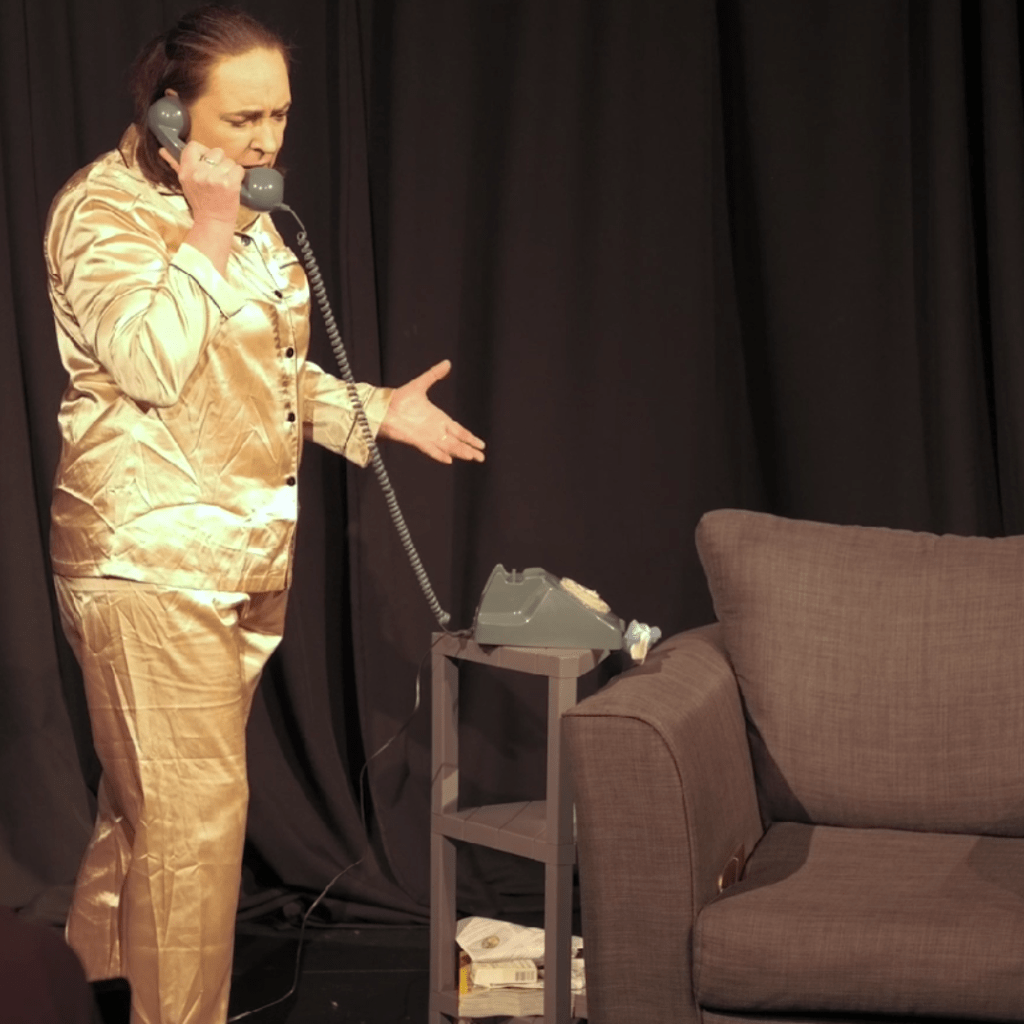
The play is searching for humour in strange places; joking about suicide, self-loathing of her appearance in a scene where she describes how she never looks in the mirror for fear of seeing herself – an ode to the plays theme around acceptance. Nevertheless, it has moments of light-hearted humour and some flirtation on The Woman’s end. The audience react well in these situations and play ball, in line with the directors’ intentions.
In one scene The Woman’s full body and legs are sprawled length ways on the sofa while romanticising their relationship aloud, this made for a visually stimulating scene. This contrasts with her banging her fists on the sofa as the phone is off and she is “waiting for it, circling it” but despair sets in and she steps “back into the dark abyss of nothingness”. She buries her head in her hands and looks up in despair and slams the flowers to the floor.
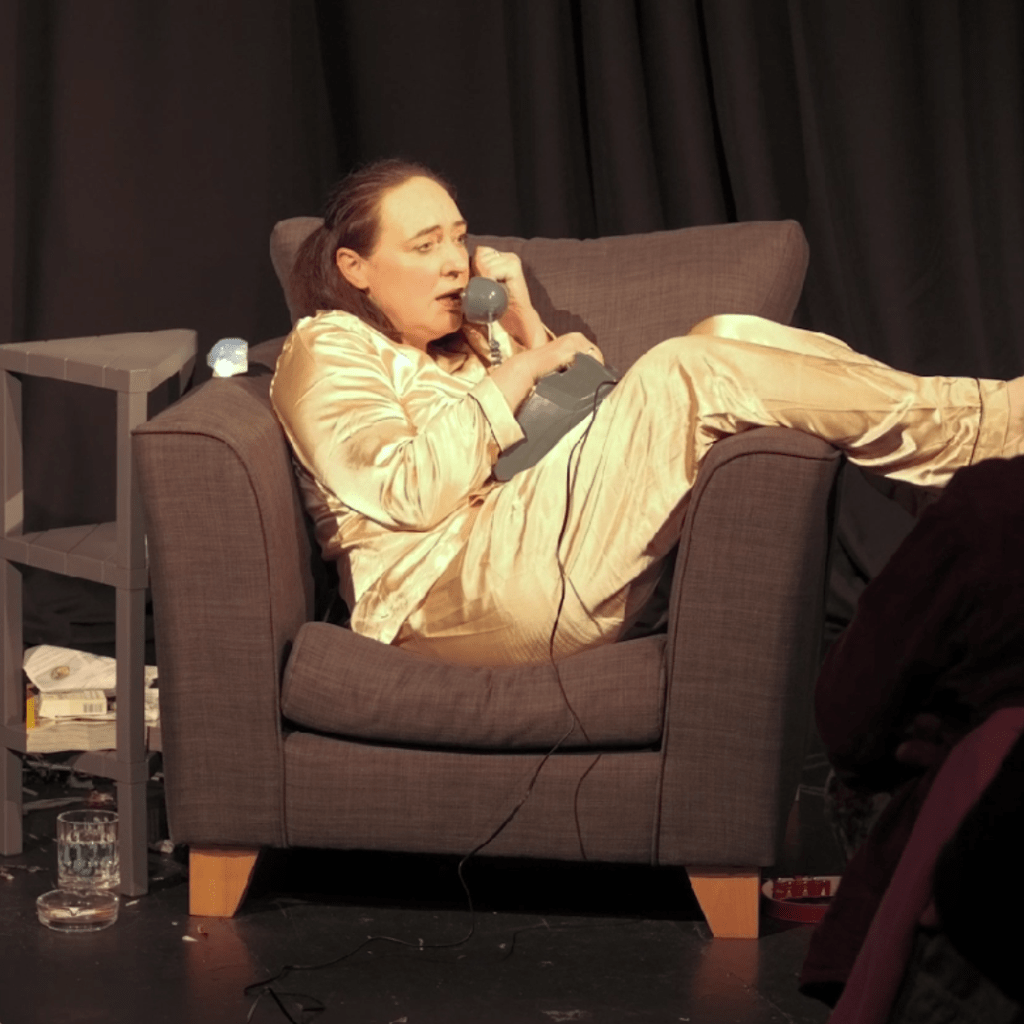
The Woman becomes more and more hectic while explaining her intense dreams about him to him, and an eery, frenzied, piano sound looms behind her hurting voice and has a distorted sound to it. This is akin to what you might imagine the mad hatters theme tune would be like in Alice in Wonderland. This works well in conveying her mindset and Myles spurs on the situation by conveying her characters declining mental health through her incoherent interpretation of the lines, with tremors in her voice but also her confidence in questionable rhetoric at other points.
As the play veers to an end the piano has slightly more clarity to it. The play ends with a dramatic grappling of whether they will put down the phone, which will ultimately be the end of their marriage and her having to let go and find a new meaning to her life. She finally exclaims “I love you!” and the phone is put down. Myles portrays a less frantic, more sober, yet obviously still devastated woman. She speaks more rationally and slowly and she carries her sack of letters off the stage and leaves the audience lost in thought.
 Ruby Henry-Dicks
Leave a comment